Nature-Led Narrative Exposition
I have created a self-narrated film with illustrative clips to describe and illustrate both my conceptual thinking and recording style as developed during the Master’s course. The film was shown to an audience of staff and students at the University of Cumbria Stanwix Theatre
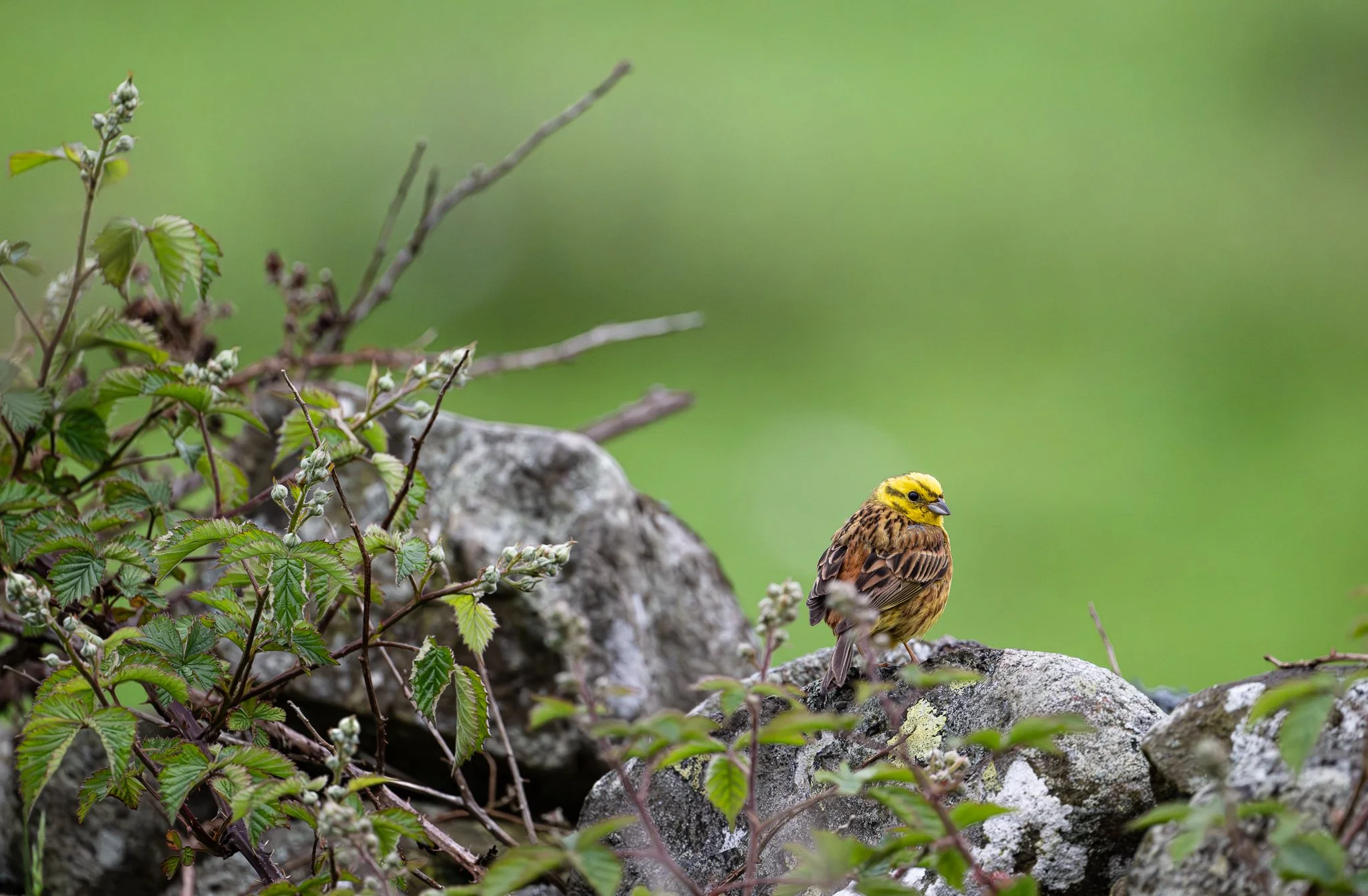
Yellowhammer
https://vimeo.com/1185862027?fl=ip&fe=ec
It was projected onto the main screen and the sound was broadcast in stereo. The lighting was dimmed and filtered blue to create an ambience particularly suited to the long night timelapse.
The film was followed by a sound-story: Rain to Grain
https://on.soundcloud.com/6uFONVWVqH0QKGFteX
Script:
I ask myself: why, when we watch or listen to wildlife programmes are we not content to just…watch and listen? To be still and to notice.
Is their value and our appreciation increased by celebrity endorsement, fact-finding, human characterisation and dramatic music? Or do such conceits further disconnect us?
As a filmmaker is it possible to strip everything back and let nature tell its own story.
For the viewer to feel immersed, reflective and maybe even enchanted. Any disturbance to the wildlife is minimised and their wild identity is respected without the projection of human characterisations. Technology, recording and editing are similarly unobtrusive with the filmmaker acting as an invisible hand. In the absence of music nature provides its own soundtrack.
The director, Yasujurō Ozu, created a precise, contemplative narrative style which explored the pathos of everyday life in post war Japan. Typically, he keeps the camera still affording the viewer the opportunity to observe and reflect. Each composition is like a stage on which the actors, or in my case, the wildlife, enter, exit and interact
In part one, I have combined a series of illustrative clips, un-sequenced but each designed as examples of Ozu’s style.
It starts with a timelapse to locate the viewer at T.S. Eliot’s “…still point of a turning world”.
In part two, the camera begins to move: almost imperceptibly as in this sunset. As
wildlife can’t be directed to stay in frame the challenge is to know when to try and follow and when to let go.
In the first clip, a still shot of a lapwing was interrupted by the surprise of an immerging hare!
I have created a short sequence here to hide my jumpy camera operating- trying to focus on and follow the running hare!
In the second, panning seemed appropriate in order to follow the gentle, gliding arrival of a curlew, back from some far-flung coastal area to breed on our North Pennine uplands.
Postscript: the opening and closing sequences of April’s Blossom moon were shot when the Artemis 2 crew were actually on route on their moon mission.
I’ve added the song of a skylark to the final setting moon- just because it was dawn and the sound is joyous.
Audience Feedback:
I prompted the audience in advance with the following 2 questions specific to the film:
How successful do you think I have been in describing and illustrating my ideas about Nature-Led Narrative?
Responses:
Generally, people felt the explanation of nature-led narrative was clear and understandable. They thought it was an interesting topic with creative scope and liked the concept of nature telling its own story.
With regards to the film project, I wish to incorporate some elements of absence and silence to convey the reality that I am recording in a nature-depleted habitat. Without narration or music, how much absence of action do you think you could be comfortable with?
Responses:
Some encouragement for individual shots to be much longer; noting there is a balance to be found between making the audience feel uncomfortable while introducing drama and building tension. Likewise, encouragement to embrace the “power” of silence and to push the idea of absence further. One interesting comment was: “Each individual shot should be its own narration”.
There were several questions about how the on-stage arrangements will be made and how much the audience should be informed and prompted. It was suggested that viewers should be “debriefed” which will increase the lasting impact ie by asking questions such as: “what did you learn from the silence”? Likewise, it was suggested people are encouraged to sit and ponder at the end.
Behind-the-Scenes timelapse and audio of the event (including script):
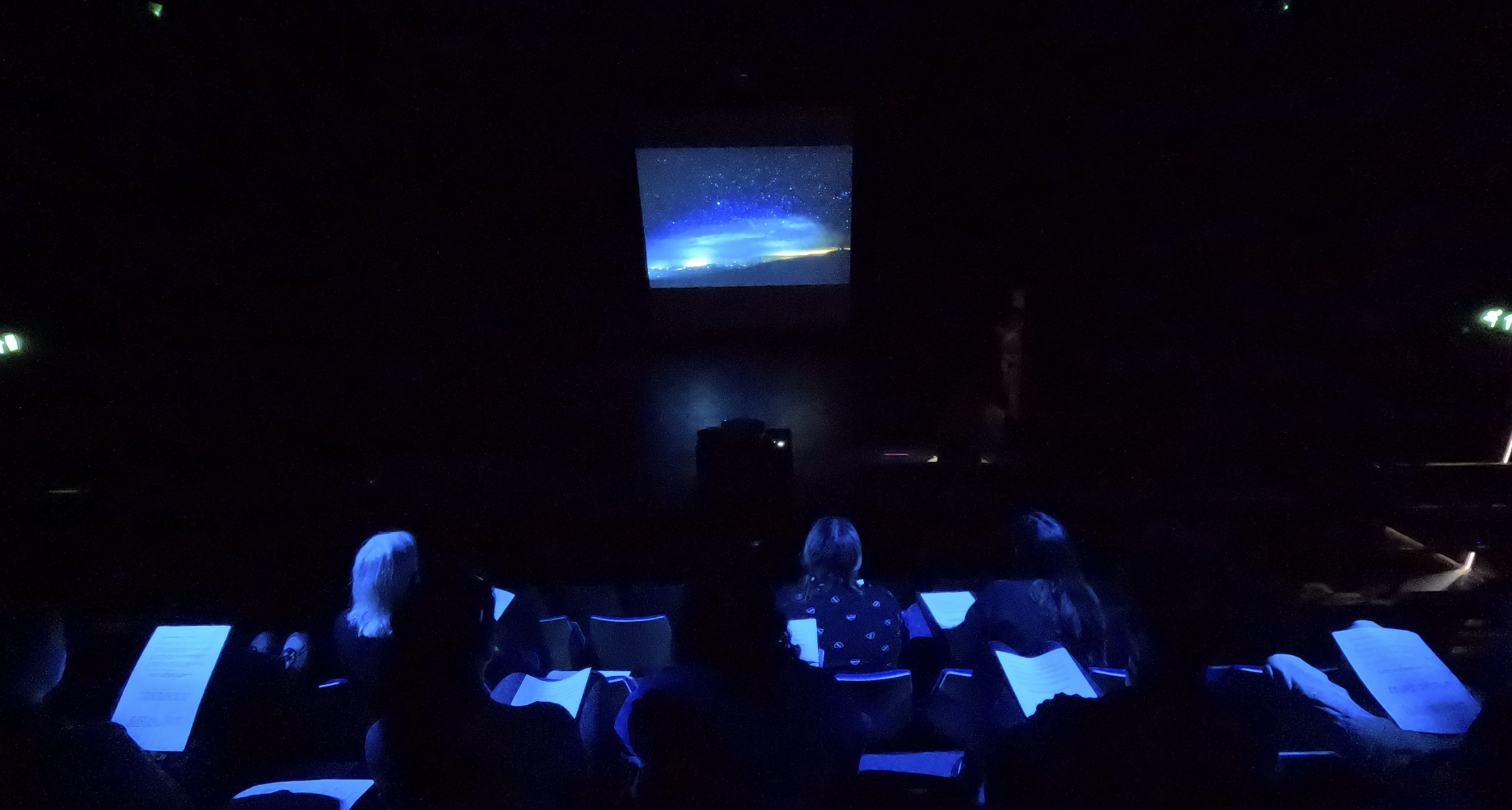
University of Cumbria, Stanwix Theatre
https://vimeo.com/1187684379/c0cb1c1cbd
Reflection:
Quality of image on screen was good as was the sound. Lots of positive comments re the quality of the sound mixing
Music not missed
Set up, organisation and ambience of the stage needs careful consideration. There is a suggestion that I use separate locations for the film and sound installation- this would overcome many of the logistical issues while also affording the opportunity for variation of narrative.
How much information to give people in advance?
How should audiences be debriefed?
Intro video in the gallery or at the entrance to the stage?
The audience feedback was spread across a number of dimensions:
Conventional/ unconventional
Tolerance of absence
Perfection/ imperfection
Comfort/discomfort- physical and emotional
Conclusion:
I need to be clear confident about my own artistic convictions and make my own statement. The word “encounters” has subsequently come to me as a potential title for the final film: it seems to capture both the personal experience of chance sightngs of wildlife while also suggesting the narrative sequence I am seeking.